
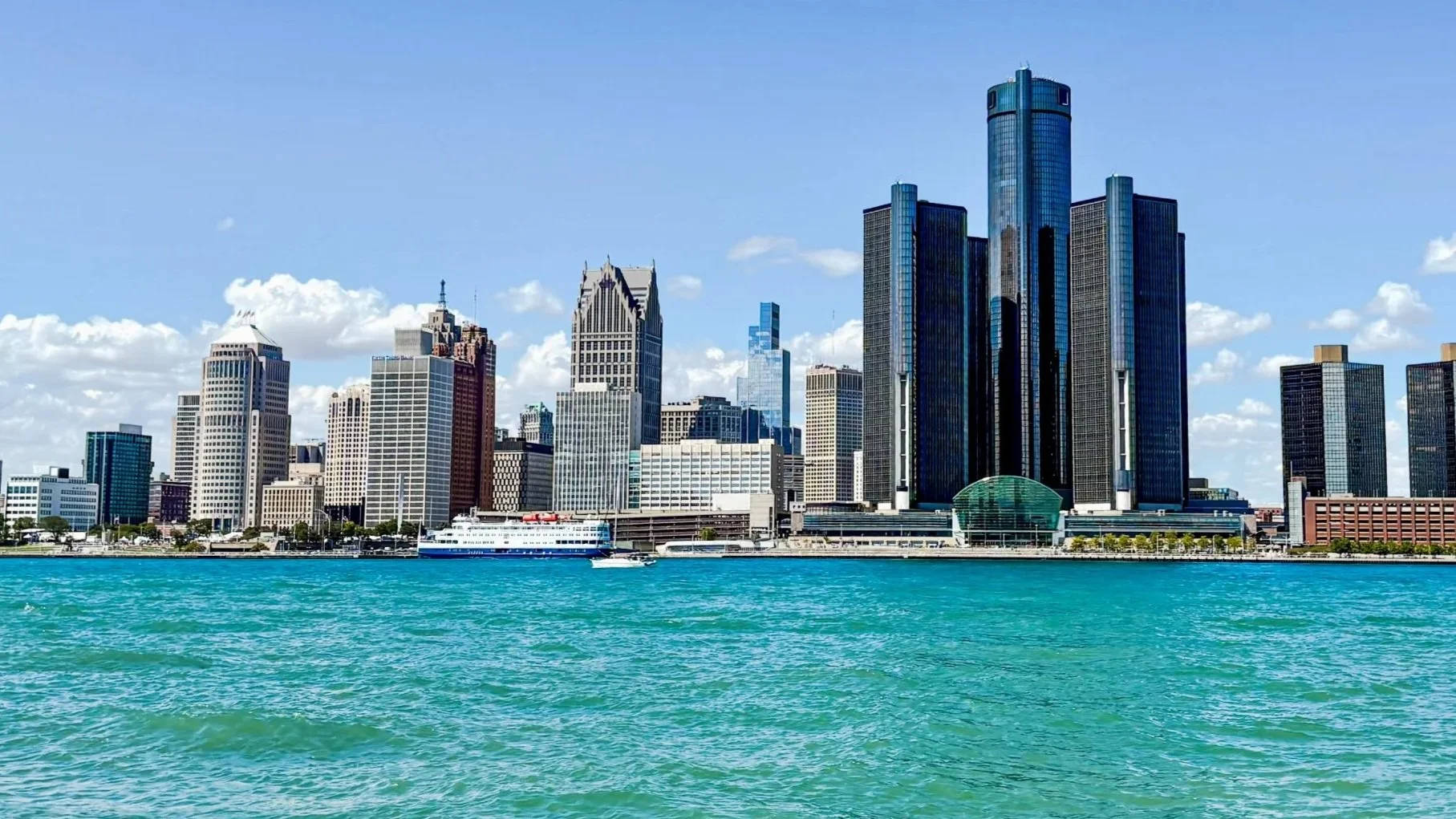
Dispatch Detroit
Urban Exploration 2026 Findings
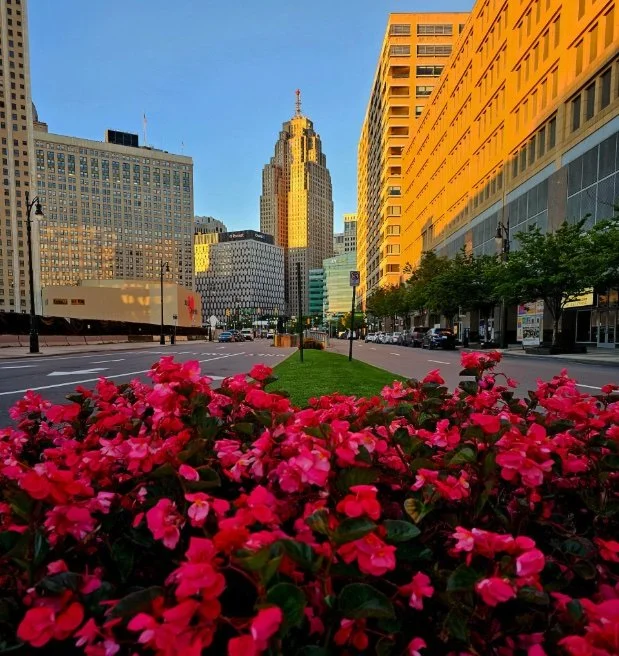
A Love Letter to Detroit & and To-Do List for Downtown SLC
We began our UX pitch to you with: “They wrote the obit for Detroit…”
Thirty years ago Detroit’s pulse was faint, the media exploited it for ruin-porn photos and click-bait headlines, and then never came back to check on it.
You told us you saw a new story in Detroit that started when you landed in a shiny airport, we arrived at a hip hotel and found clean, safe streets; talked to locals and caught their pride, heard their resilience.
We learned just how much we have in common. Both downtowns drew about 30 million visits last year. Detroit invested roughly $10 billion downtown over the last 15 years, and Salt Lake has the same amount pledged to 26 projects Downtown this decade. The difference is Detroit had to fight for every inch, through decades of disinvestment and the largest municipal bankruptcy in American history. We’re in a much better place as we launch our next chapter Downtown.
Here's our snapshot of what we saw, what we learned, and what it could mean for Salt Lake City.
Consider it a draft. What did you see? What should we do? Call your favorite Alliance staffer or send notes to info@downtownslc.org. Let's keep the conversation going.
Public Realm First: Management is the Product
Relevant to: Gallivan Center, Civic Center, Pioneer Park, Downtown Ambassadors, public space funding
What did we see?
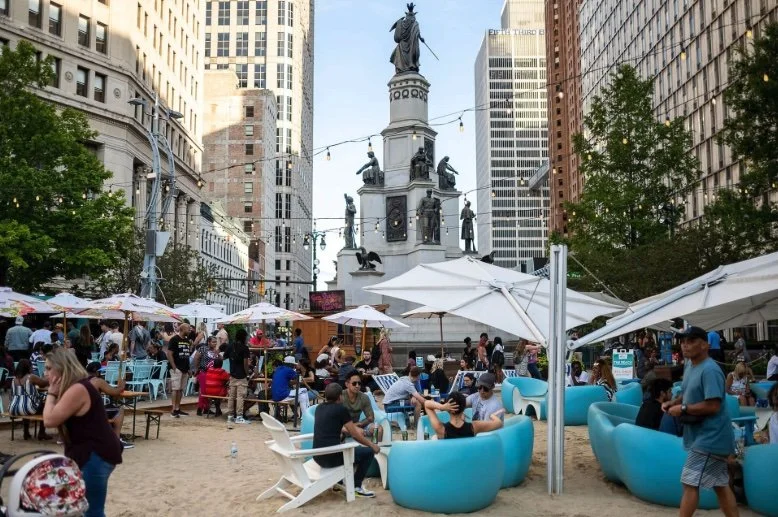
The Downtown Detroit Partnership started with streetlights, sidewalks, and parks. Now, DDP manages 18 public spaces and produces or hosts more than 1,200 events a year. That includes Campus Martius, where the lawn becomes an ice rink every winter and a beach every summer. The first holiday tree lighting drew 2,000 people. Now it draws 125,000! The rink cost about $300,000 to install and brought in $1.2 million a year. DDP has privately raised the money for its parks every single year since 2003.
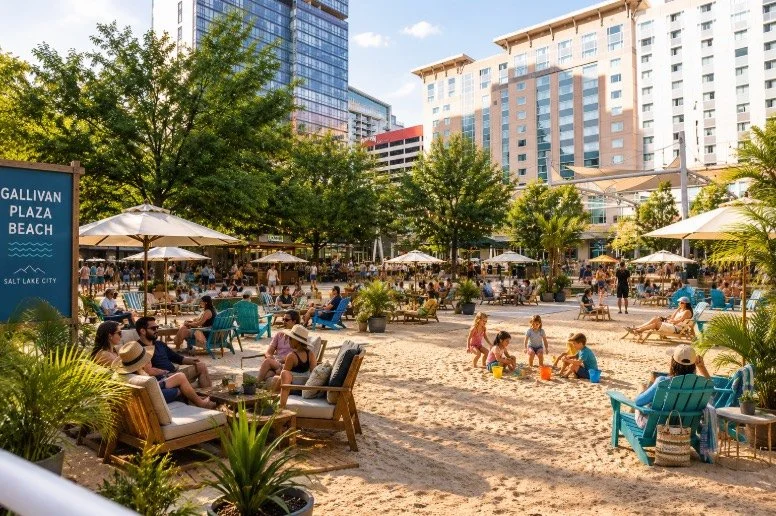
A beach at Gallivan? It could happen!
What did we learn?
Programming came before investment. Free events gave people a reason to come downtown, and once people showed up, investors started seeing possibilities in empty buildings.
Before any design work, DDP does extensive public outreach to figure out who will use the space. This makes every park feel different and “fitted” for the neighborhood and community surrounding it.
Donors invest once a space is visibly clean, safe, and beautiful. Crystal Perkins manages 310 parks in Detroit. She told us about an idea lifted from Houston, where philanthropy funds maintenance for years after the ribbon cutting. (Donors paid for maintenance once their names were attached.) David Cowan’s earned-revenue advice was simple: start somewhere, refine it, and give it three years before you’ve declared victory or pivot.
What can we do?
A park that can take a beating and still be somewhere you’d read a book. Blake Thomas said, “Civic Center is being designed to accommodate the Olympics and a place where people want to hang out on a Tuesday.” Let’s do it.
Commit to a consistent baseline of care across downtown public spaces, with Downtown Ambassadors as frontline hosts.
Leave room for surprise. Nobody asked for a beach in downtown Detroit. Now it’s the most photographed spot in town.
Explore long-term management agreements that outlast any single administration.
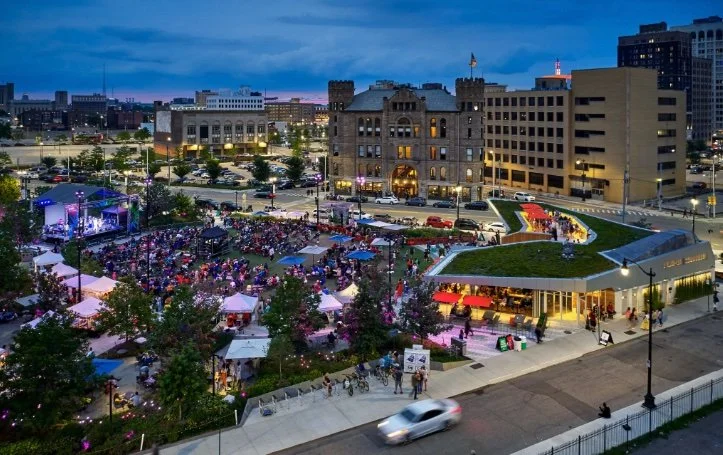
Is it a two-lawn year or a three-lawn year? Ask David Cowan.
Everybody Under the Tent
Relevant to: Downtown Farmers Market, The Blocks, Temple Square reopening, Downtown Rising 2035
What did we see?
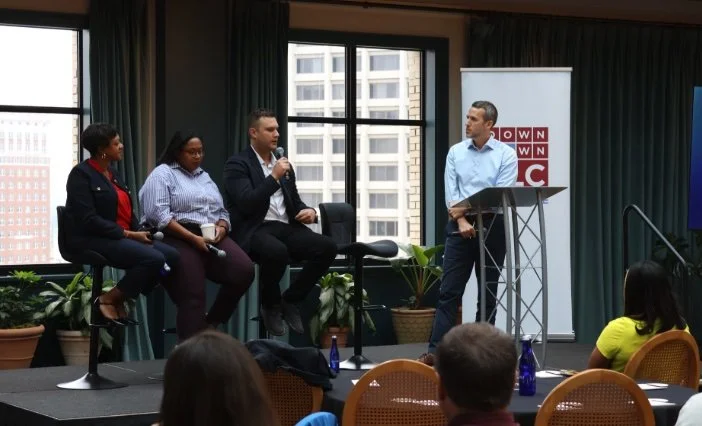
Programming built for the whole city. DDP runs 55 programming series with 250 nonprofit partners. The Riverfront Conservancy programs 300-plus days a year, and every Detroit zip code shows up in its visitor data. Michigan Central stays open to the public for free, with monthly Fridays featuring Detroit artists. And 40,000 people pack the Eastern Market for special events.
What did we learn?
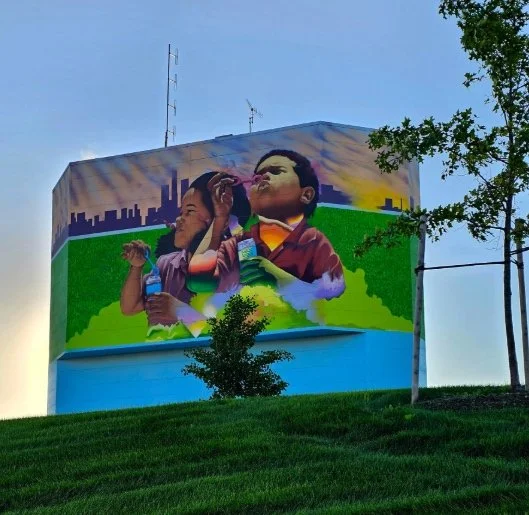
People come back when they see themselves there. Rian English from Olympia Development put it simply: culturally relevant programming isn't a nice-to-have in a city that's more than three-quarters Black. It's the job. Rachel from the Riverfront Conservancy shared how a small grant turned two guys playing chess in a park into a weekly club that now plays all over the city. Participation builds ownership, and people with ownership keep a place clean and safe.
What can we do?
Look at every program calendar and ask who's missing.
Offer small grants to the neighbors already programming our spaces for free. (How do we amplify this, Lucas?)
Pilot a downtown night market. (Carly, can we assign this to you?)
Greenways: Build it,
Then Bring Them
Relevant to: Green Loop, Jordan River Trail, 9 Line, the sports and entertainment district paseo
What did we see?
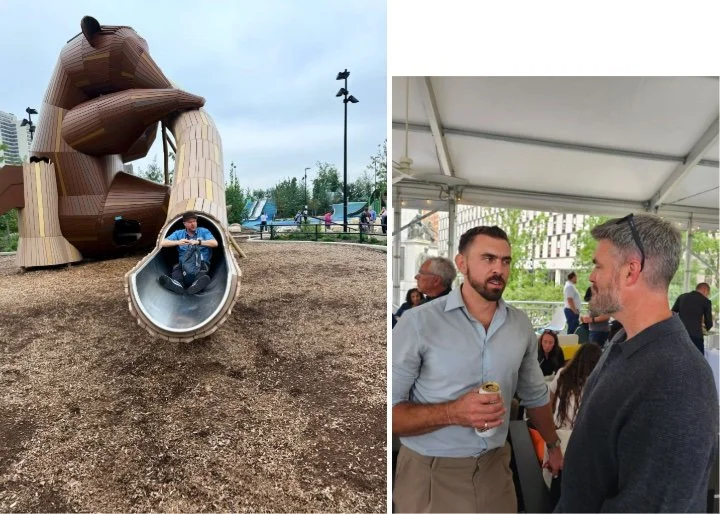
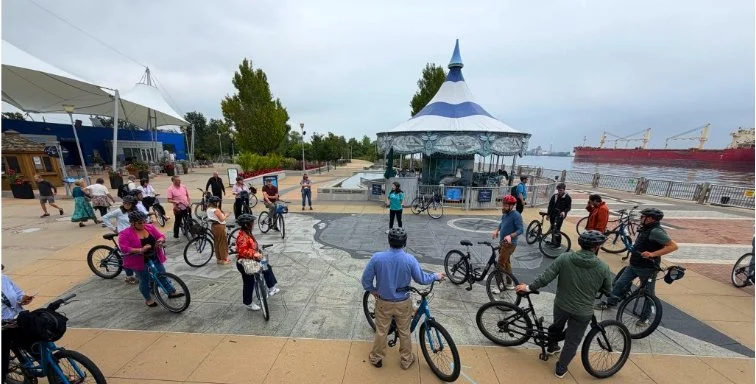
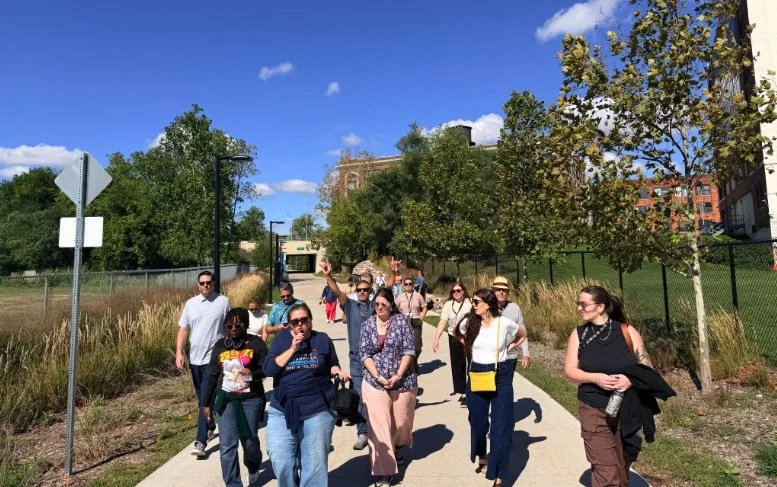
The Detroit Riverwalk turned cement silos and rail yards into 4.5 miles of whimsical parks and trails that welcome 3 million visitors a year. Ralph C. Wilson Jr. Centennial Park, which opened last year, gives the region a playground worth driving to. And the Joe Louis Greenway is building a 29-mile loop through four cities with no money from the city's general fund. Crews have already hauled out more than 30,000 tires!
What did we learn?
Bring residents along from the start. Detroit flew community neighbors to Atlanta to walk the BeltLine, and held meetings in residents' living rooms. When Detroit ran into private land along the way, it negotiated land swaps and worked out deals that benefited the owners too. Lisa from Bedrock, who once ran the QLine, offered the reminder we need: just because it exists doesn't mean people will use it. Getting them there is an equally-sized job.
What can we do?
Invite engaged residents onto future study trips.
Connect the Jordan River Trail to downtown, with places to gather along the way (Arlen's idea).
Budget as much effort for getting people to use a new space as for building it.
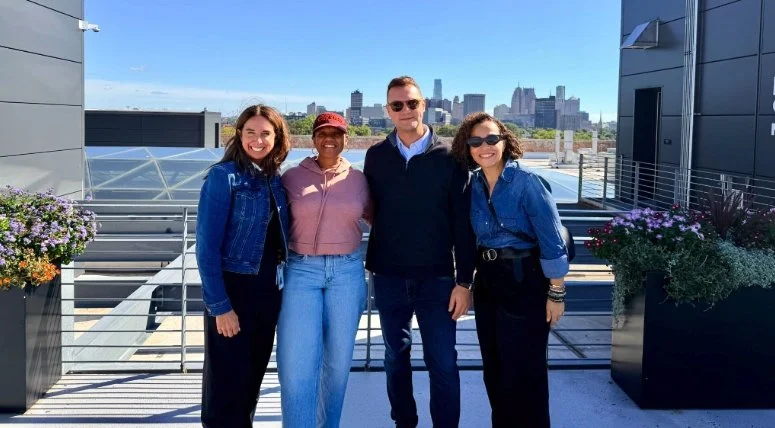
Walking the Southwest Greenway with Joe Louis's daughter. Royalty.
Patient Capital, Real Community Benefits
Relevant to: the sports and entertainment district, Salt Palace rebuild, private investment at scale
What did we see?
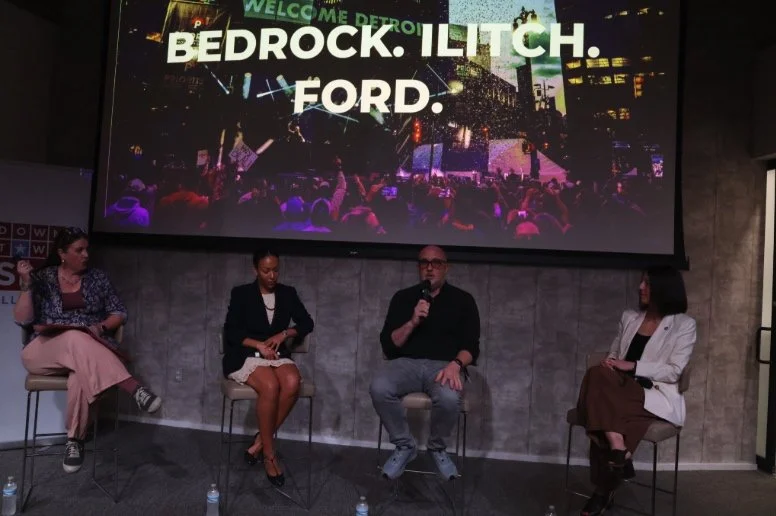
Three families of companies, Bedrock, Ilitch, and Ford, bet big on the long game. Bedrock has bought about 140 properties in 15 years and is now working with General Motors to reimagine the Renaissance Center, removing two towers to open acres of public waterfront. Ilitch's District Detroit spans 44 contiguous blocks around its sports venues.
What did we learn?
Many of these deals don't pencil on their own. They happen because owners weigh strategic impact alongside financial return, a philosophy Bedrock calls "for more than profit." In Detroit, large projects that seek public incentives go through a Community Benefits Ordinance, where elected neighbors negotiate directly with developers and review compliance every year. And a sports district only works for small businesses if it's alive between game days.
What can we do?
Build local businesses into the new sports and entertainment district. (They might need creative leases.)
Staff community engagement as a full-time job, not a side duty.
Measure success by how a district feels on a Tuesday, not just on game night.
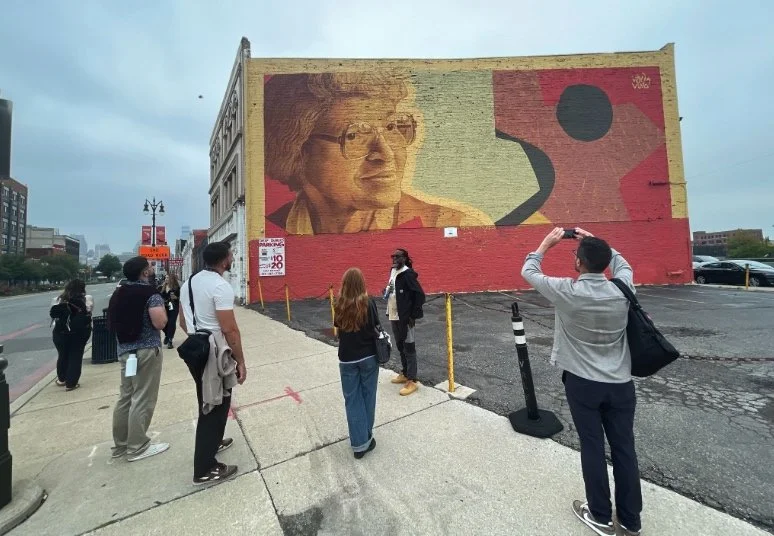
Bring Back the Landmarks
Relevant to: Rio Grande Depot, Main Street, adaptive reuse
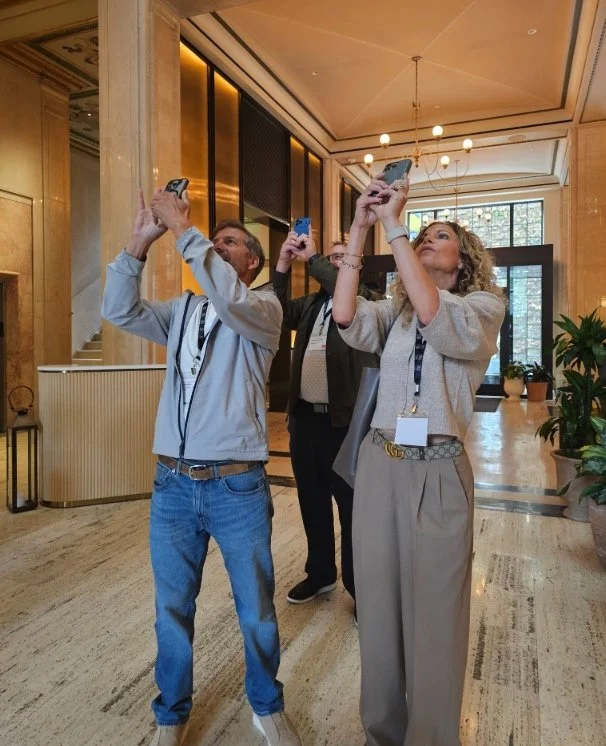
What did we see?
Michigan Central, the train station that stood empty from 1988 until Ford's $950 million restoration. Book Tower, scrubbed clean of decades of soot. Newlab, filling a former book depository with dozens of mobility startups. Greektown, authentic Detroit–polished and ready to return to its glory days.
What did we learn?
Mark from Michigan Central shared one story that stuck with us. A resident told him the empty station represented the city's trauma, and seeing it full of life again helped heal it. People stood in front of the building and cried in those first few months. Landmarks carry memory, and bringing them back gives a city permission to believe again.
What can we do?
Help program the Rio Grande Depot. (Danny Wall was listening.)
Put our sturdy, underused historic buildings to work, starting with an innovation space like Newlab (Chris Kirk's idea).
Treat Main Street's existing bones as an opportunity, not a problem (Cynthia's note).
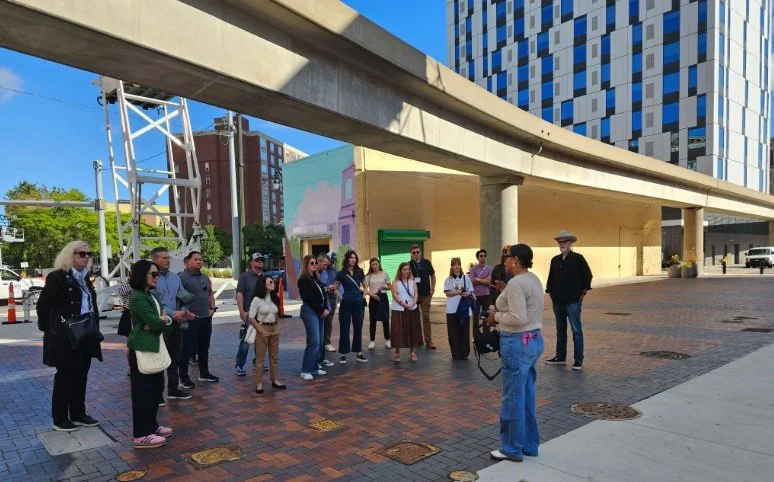
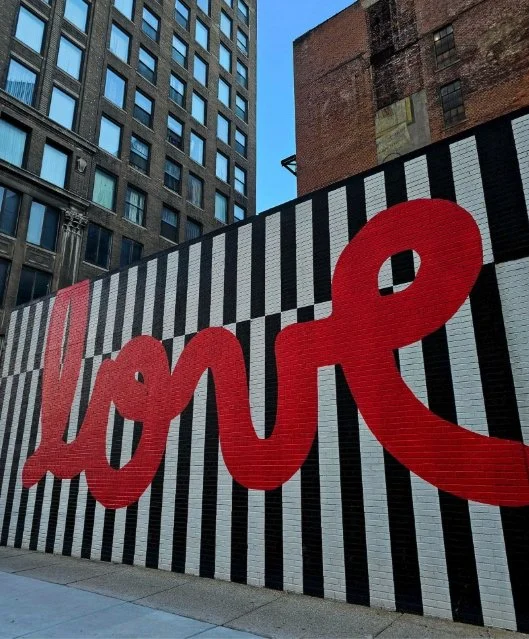
Three Final Thoughts
» After our scout to Motor City two years ago, we wrote, “The question isn't whether Detroit's comeback can inspire Salt Lake City. The question is whether Salt Lake City has the guts to act on the inspiration.” That remains true.
» David Cowan said downtown Detroit isn't done. His foot is still on the gas. Salt Lake has the investment, the visitors, and a decade of once-in-a-generation moments ahead. Those are advantages, not a plan or a promise. Let’s not squander this moment.
» We start our decade of investment miles ahead of where Detroit was forced to begin, and that was: start in the public realm, invite everyone in, and keep showing up.
A Note of Thanks
Block by Block, Price Family Foundation, and Salt Lake City.
Huge thanks to our Detroit hosts: David Cowan and Laura Dean at the Downtown Detroit Partnership, Rachel Frierson at the Detroit Riverfront Conservancy, Crystal Perkins at the City of Detroit, Ayesha Maxwell at Greektown Neighborhood Partnership, Lisa Nuszkowski at Bedrock, Rian English at Olympia Development, and Mark de la Vergne at Michigan Central.

THANK YOU TO OUR GENEROUS SPONSOR

Additional sponsorship opportunities are available. Please contact kristen@downtownslc.org for more details.